

From Overthinking to Overflowing


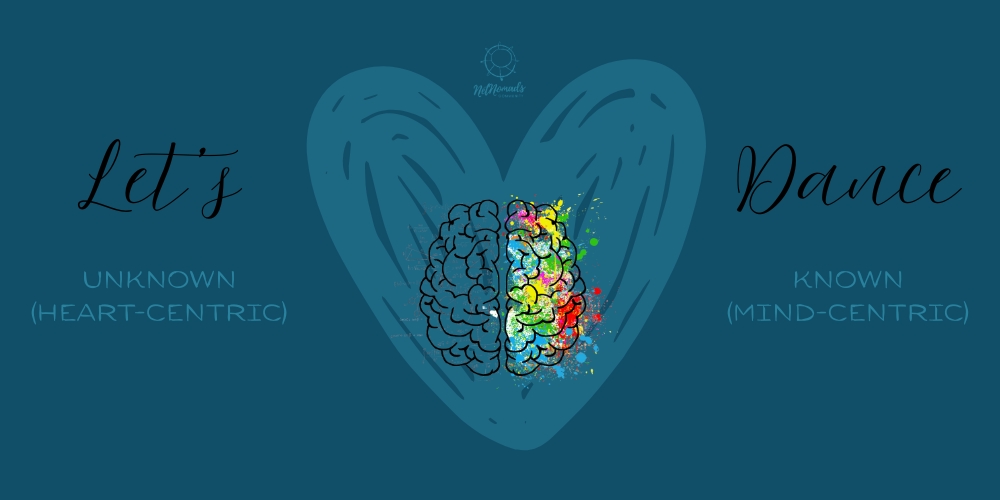
In our Unscripted Podcast, we discussed a concept from Dr. Joe Dispenza’s work that has been profoundly transformative for me: the Think Box and the Play Box.
Embracing Dr. Joe’s Think Box and Play Box
It sounds simple – and in many ways, it is – but the more I live with it, the deeper and richer it becomes. This practice has shaped not only my meditations, but also how I show up in life, how I deal with challenges, and how I connect with the miraculous.
Think Box: Clarity and Intention
Before I begin meditating, I step into what Dr. Joe calls the Think Box. This isn’t a place for spiraling thoughts or overthinking—it’s a place of crystal clarity.
Here, I ask myself: Why am I doing this meditation today? What’s my purpose? Am I seeking healing? Energy? Coherence? A softening of the heart?
Once I know my why, I define a specific outcome. The more precise I am, the more power it carries. For example, during The Alchemist meditation, I’ll name what I want to “alchemize” or transform. During a New Potentials meditation, I’ll decide which new version of myself I’m stepping into.
Then, I mentally rehearse that future. I don’t just think it—I feel it. I imagine it with all my senses, as if it’s already happening. Just like a golfer visualizing the perfect swing, this mental rehearsal primes both my brain and my body.
Sometimes my Think Box is as simple as jotting down my intentions in my meditation journal and drawing a big “C” for Calm with squiggly lines—on the left and how each will make me feel as they are realised on the right. That symbol becomes my focus during meditation, a shorthand for everything I’ve already prepared.
Play Box: Surrender and Flow
Once the groundwork is laid, I step into the Play Box. Here, I let go.
This is not about doing, analyzing, or forcing anything. It’s about trust. About letting my body’s innate wisdom take over. It’s in the Play Box that intention and presence merge, and I’m no longer “doing” a meditation—I’m living it.
For me, this is the most magical part. It’s where the energy shifts, where synchronicities show up, where healing and transformation happen without my interference.
It reminds me of something Wayne Dyer taught—that when we prime our minds before sleep, our subconscious works on it through the night. The Play Box is like that, but in meditation: the conscious mind prepares, and then the subconscious (and the body) are free to play.
Making It Your Own
What I love most is that the Think Box and Play Box are not rigid steps—they’re living practices. Each of us can make them our own.
In our NetNomads circle, Grahamm shared how he listens to his body, especially when managing chronic pain. His Think Box is simply checking in with what’s needed that day, and then he surrenders into whatever arises in the Play Box.
Victoria had a beautiful realization that sometimes our Think Box becomes so automatic, we don’t even notice it. Just the act of showing up consistently—with honesty and authenticity—is enough.
And for all of us, the goal is to shorten the “refractory period”—that time it takes to recover our balance after being triggered or thrown off course. By practicing this dance between intention and surrender, we strengthen the “Inner Game”. We learn, as Timothy Gallwey put it, to observe without judgment and to ask, “What is this teaching me?”
A Living Community Practice
For the past three years, a group of us have been meditating together for 2 hours each morning since the Dr Joe event in London 2022.
Our QB Collab meditation group meets on Zoom from 5 a.m. to 7 a.m. UK time. Mondays are open to family and friends, and the rest of the week is for those who have attended a Dr. Joe retreat, as we share a common foundation to go deeper into the work.
But I always remind people—miracles don’t only happen at retreats. Many of us have seen extraordinary changes just by applying Dr. Joe’s books and recordings at home. His Give to Give foundation also makes retreats accessible for those who need support, which I deeply admire.
We spoke about accessibility to much-needed practices, and Grahamm shared his vision behind establishing Moodra. Even the scent of his multisensory therapy candles can act as a trigger for relaxation and healing—proof that we are all conscious creators, and the tools we need will always find us.
My Personal Ritual
Here’s what this looks like in my daily life.
I rise about fifteen minutes before meditation. I clear my mind by writing down any worries or clutter in my meditation journal. I light my Moodra candle, signaling that this is sacred time.
Then, I define my intention for the session. I allow myself to feel the elevated emotions—gratitude, joy, love—as if what I desire has already manifested.
From there, I release it all into the Play Box. I surrender. I allow. I trust.
In the evening, I reflect again, carrying the best feelings of the day into sleep, so they can seed the next morning’s Think Box. In this way, the practice becomes cyclical, alive, and overflowing.
The Heart of It All
At the end of the day, the Think Box and Play Box remind me that I am not here to control every detail—I am here to create, to feel, and to trust.
When I prepare with clarity and surrender with presence, I move beyond overthinking and into overflowing.
And that, to me, is the essence of conscious creation.
♥ So I invite you: enter your Think Box with clarity, then let go into the Play Box with trust. Feel it. Live it. Play in the field of infinite possibilities. That’s where the magic begins.


Responses